
3 Winter Self-Care Practices to Support Your Body & Spirit Through the Dark Season

Winter asks us to live differently—but most of us keep using summer tools in a winter body.
Shorter days, less light, more time indoors, and colder temperatures all change our nervous system chemistry. Motivation dips. Mood wavers. Energy becomes precious. This isn’t a personal failure—it’s biology meeting season.
Winter self-care isn’t about “fixing” yourself. It’s about supporting the brain and body through a real environmental shift, while honoring the inward pull of the season.
Here are three winter practices that gently support dopamine and serotonin, stabilize mood, and help you stay connected without forcing brightness.
1. Morning Light: Let the Sun Touch Your Eyes (Even When It’s Weak)
Even in winter—especially in winter—morning light is medicine.
Within the first hour of waking, getting natural light into your eyes (being outside but not staring directly into the sun) helps reset your circadian rhythm. This signals to your brain: It’s daytime. We’re alive. We’re safe.

Why this matters in winter:
- Morning light increases serotonin, which supports mood and emotional stability
- It helps regulate melatonin later at night, improving sleep quality and anchoring your internal clock
- It brings more power to balancing the other systems of the body (hormones, energy, skin, etc)
- Even cloudy light carries UV and brightness your brain recognizes
Think of it as knocking gently on your nervous system’s door and saying, We’re here. Let’s begin slowly.
How to practice:
- Step outside for 5–15 minutes within an hour of waking
- No sunglasses if it’s comfortable
- Pair it with something grounding: tea, stretching, quiet walking
- If sun is scarce, brightness still counts—clouds don’t cancel the signal
This isn’t about energy or productivity.
It’s about orientation—giving your body a sense of place in time.
2. Rhythmic Movement That Warms (Not Depletes)
Winter bodies don’t crave intensity—they crave circulation.
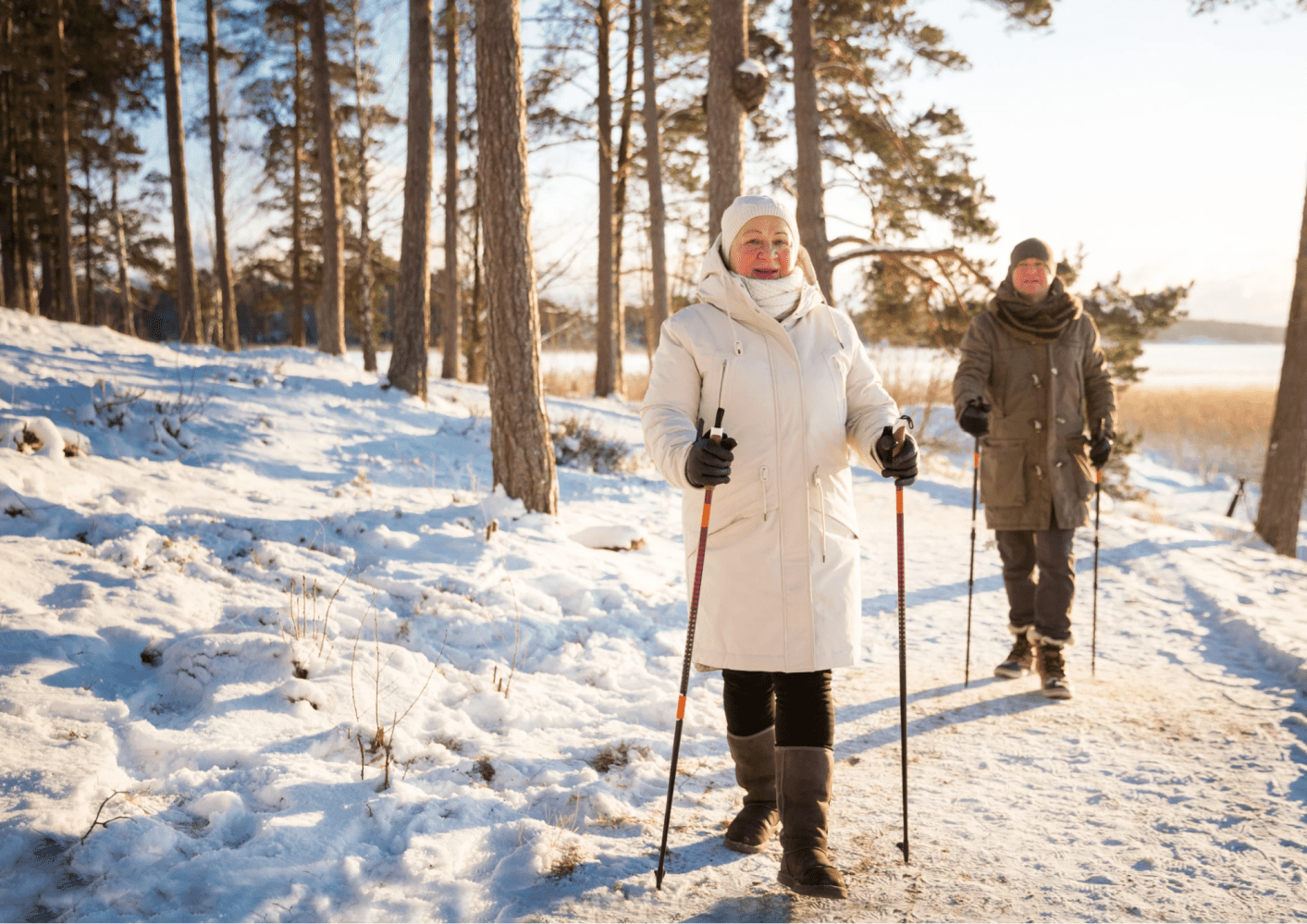
Gentle, rhythmic movement releases dopamine in a sustainable way, supporting motivation and emotional steadiness without tipping into burnout.
This isn’t the season for constant pushing. It’s the season for warming from the inside out.
Examples:
- Slow yoga or qigong
- Walking (especially in nature)
- Swaying, rocking, or intuitive movement
- Light strength work with long rest
- Dancing to one song, not a whole playlist
Why this works:
- Rhythmic movement stimulates dopamine, improving mood and motivation
- It increases blood flow and warmth, countering winter stagnation
- It calms the nervous system rather than spiking stress hormones
- It reconnects you to your body without demanding performance
If you finish movement feeling more present, not more depleted—you’ve done it right.
3. Daily Warmth & Comfort Rituals (Serotonin Through Safety)
Serotonin isn’t just about happiness—it’s deeply tied to felt safety.
In winter, one of the most powerful self-care practices is creating predictable, sensory comfort that tells your body: You’re held. You don’t have to brace.

Warmth rituals support serotonin by activating the parasympathetic nervous system.
Examples:
- Warm baths or showers (especially at night)
- Heated blankets or hot water bottles
- Soups, stews, and warming spices
- Slow mornings or early evenings
- Wearing layers that feel soft and protective
Why this matters:
- Warmth increases vagal tone and relaxation
- Predictable comfort lowers baseline stress
- Serotonin thrives when the nervous system feels contained and secure
Winter is not the time to be austere.
It’s the time to build a nest.
Winter Is Not a Problem to Solve
These practices aren’t about forcing yourself into a better mood. They’re about working with the season instead of against it.
Light to orient you.
Movement to circulate you.
Warmth to hold you.
When dopamine and serotonin are supported gently, winter becomes less heavy—and more honest.