Eco-Tourism on the Big Island: How Kona Cloud Forest Sanctuary Is Restoring Hawaiʻi’s Future
Travel is changing.
More people are no longer looking for vacations built entirely around consumption, crowded attractions, or rushed sightseeing. Instead, travelers are increasingly searching for experiences that feel meaningful — experiences that support conservation, deepen connection to place, and leave a positive impact behind.
That shift is one reason eco-tourism on the Big Island has grown so rapidly in recent years.
And among the most unique examples of sustainable tourism in Hawaiʻi is the Kona Cloud Forest Sanctuary, a rare tropical cloud forest and conservation project located on the slopes above Kona.
What Is Eco-Tourism?
Eco-tourism is a form of responsible travel focused on supporting conservation, protecting natural environments, and creating meaningful relationships between visitors and the places they explore.
At its best, eco-tourism:
- Supports environmental restoration
- Protects biodiversity and ecosystems
- Encourages sustainable travel practices
- Educates visitors about local ecology and culture
- Creates low-impact, intentional travel experiences
Instead of treating nature as something to consume, eco-tourism encourages people to participate in its protection and appreciation.
On the Big Island of Hawaiʻi, home to some of the world’s most unique ecosystems, this kind of travel matters deeply.
The Kona Cloud Forest Sanctuary: Conservation in Action
The Kona Cloud Forest Sanctuary began as a family-led reforestation project on previously degraded cattle pasture land.
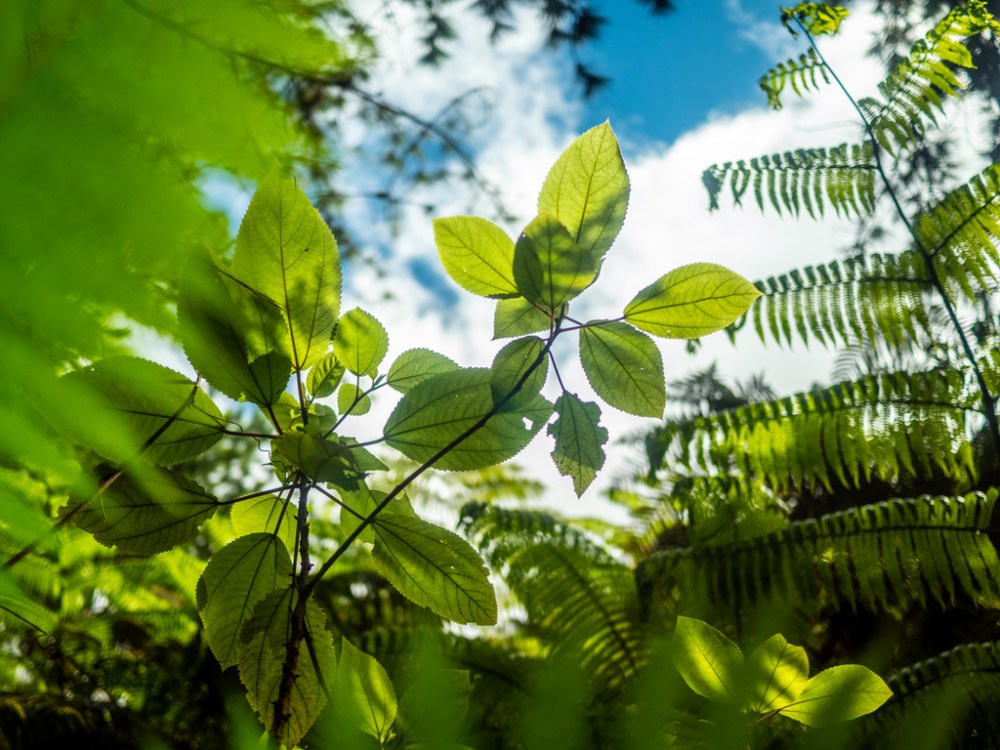
Over decades, the land has been carefully restored into a thriving cloud forest ecosystem filled with giant ferns, tropical plants, bamboo groves, moss-covered trees, and rich biodiversity.
Today, the sanctuary serves multiple roles:
- Conservation and reforestation project
- Eco-tourism destination on the Big Island
- Educational nature experience
- Wellness and mindfulness retreat space
- Protected cloud forest ecosystem
Visitors are not simply touring a forest — they are witnessing ecological restoration happening in real time.
A Different Kind of Big Island Experience
Many popular tourist activities in Hawaiʻi focus on entertainment and sightseeing.
The cloud forest offers something deeper:
connection.
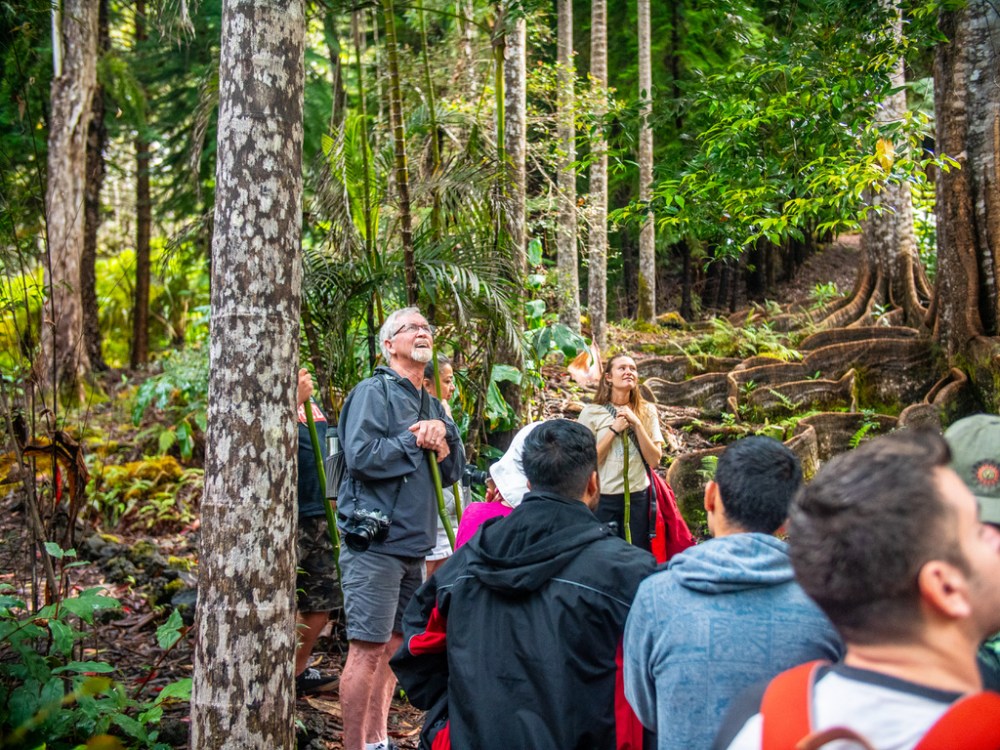
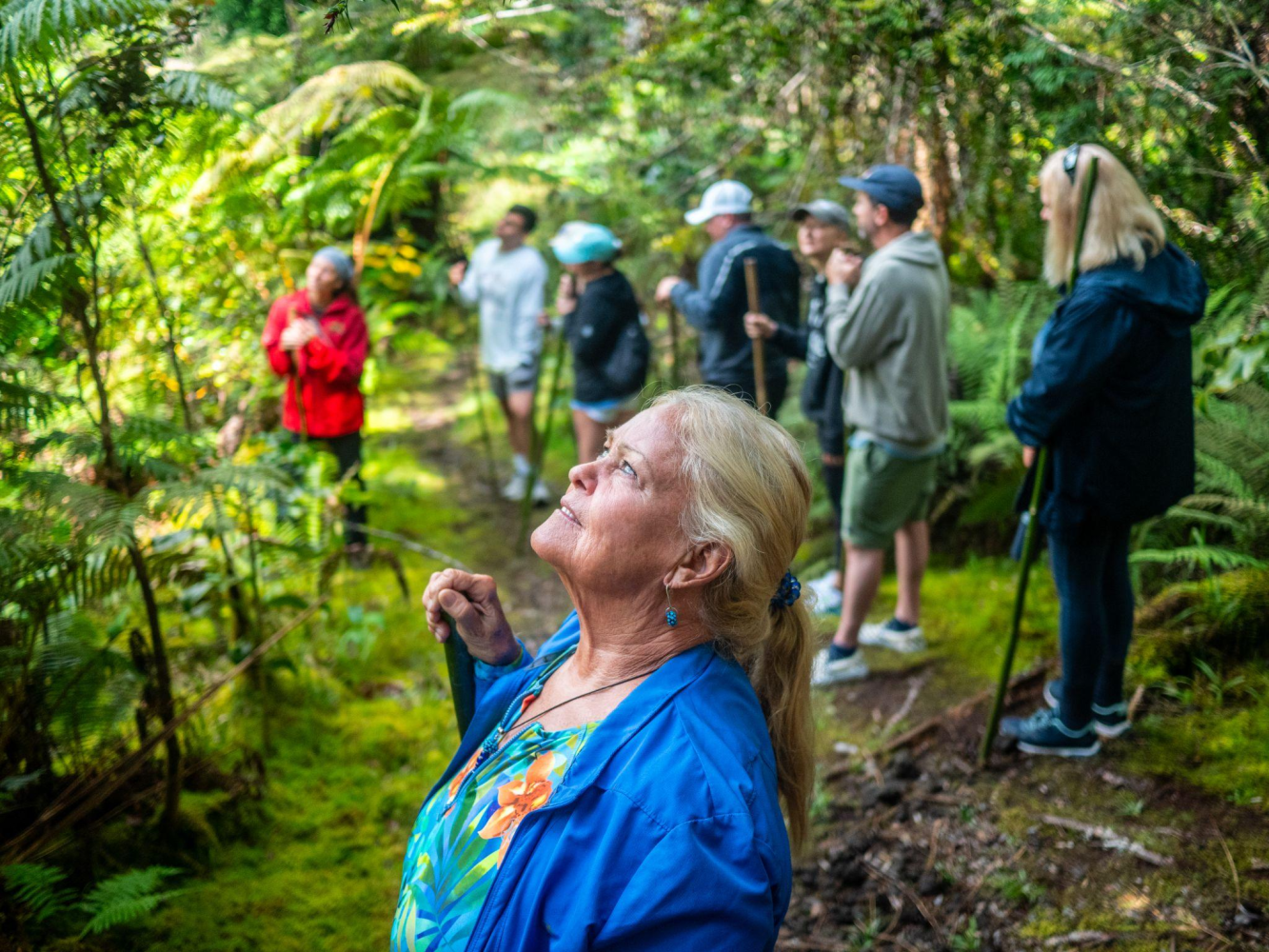
Guests experience the ecosystem through guided walks, educational tours, forest bathing experiences, mindfulness practices, and immersive wellness experiences designed to foster a deeper relationship with nature.
Visitors learn about:
- Hawaiʻi’s unique ecosystems
- Reforestation and watershed protection
- Native and tropical plant species
- Biodiversity and environmental stewardship
- The ecological importance of cloud forests
Rather than rushing through an attraction, guests are encouraged to slow down, observe carefully, and engage with the forest through all five senses.
That slower pace often becomes one of the most memorable parts of the experience.
FAQ: Eco-Tourism at Kona Cloud Forest Sanctuary
What makes the Kona Cloud Forest Sanctuary an eco-tourism destination?
The sanctuary combines conservation, reforestation, environmental education, and low-impact guided experiences within a protected cloud forest ecosystem on the Big Island.
What is a cloud forest?
A cloud forest is a rare tropical forest ecosystem where clouds and mist consistently move through the canopy, creating moisture-rich conditions that support dense biodiversity and freshwater capture.
How does visiting the sanctuary support conservation?
Tourism at the sanctuary helps support ongoing restoration, conservation efforts, ecosystem protection, and environmental education initiatives connected to the cloud forest.
Are the experiences family friendly?
Yes. The sanctuary welcomes families, couples, solo travelers, eco-conscious visitors, wellness travelers, and anyone interested in meaningful nature experiences on the Big Island.
What kinds of experiences are offered?
Experiences may include guided cloud forest tours, forest bathing, mindfulness walks, yoga, sound baths, educational eco tours, and immersive wellness experiences in nature.