
Vagus Nerve 101: Why Everyone’s Talking About It (And What It Actually Does)

If you’ve been in wellness spaces lately, you’ve probably heard people say things like:
- “Regulate your nervous system.”
- “Activate your vagus nerve.”
- “Get into rest and digest.”
- “You’re stuck in survival mode.”
If you’ve secretly thought, I don’t even really understand what my nervous system does, you’re not alone! Welcome to Vagus Nerve 101!
First: What Is the Nervous System?
Your nervous system is your body’s communication system, it starts in your brain and extends to your spinal cord and the rest of your body. There are several “channels” of communication within the nervous system.
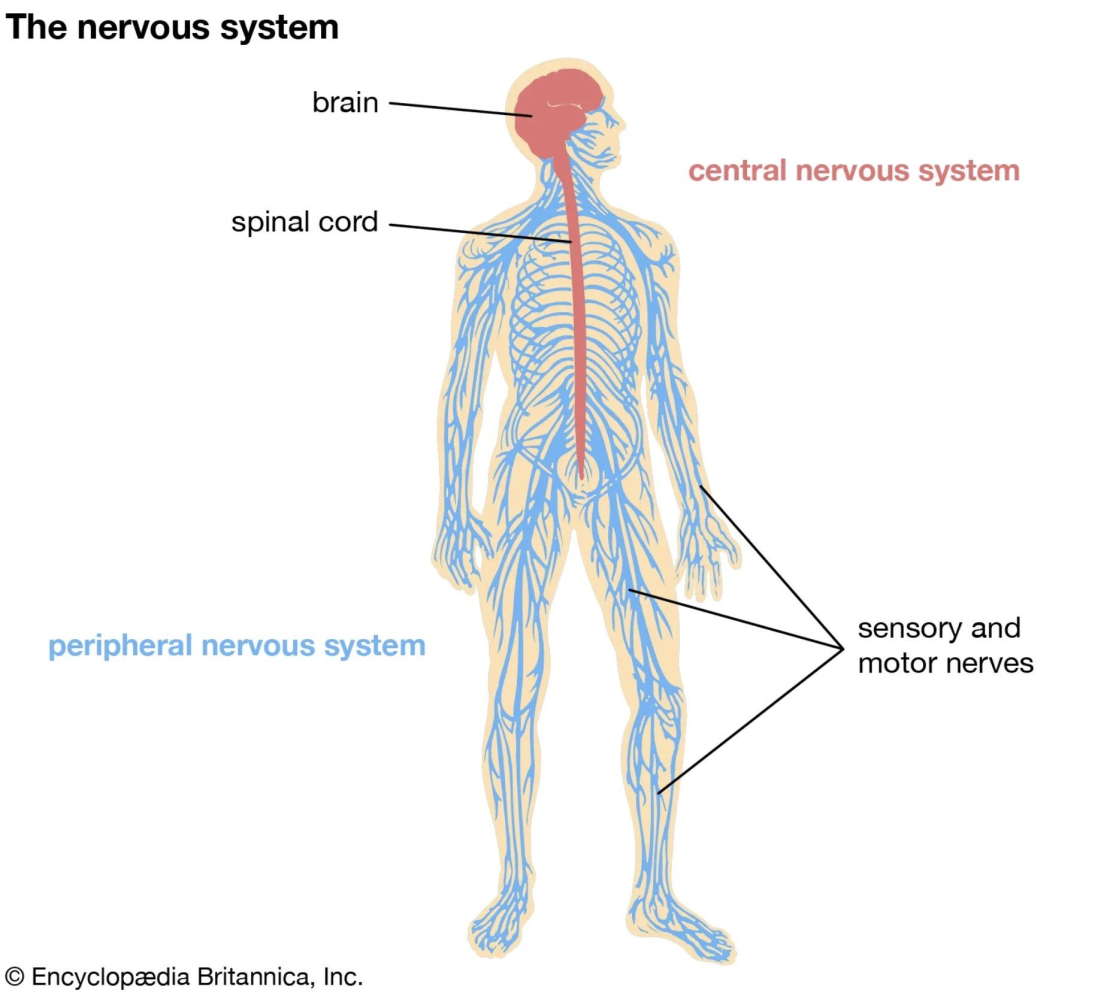
(photo: https://www.britannica.com/science/central-nervous-system)
Your nervous system communicates messages from your brain to your body, and your body to your brain.
It controls things you choose to do (like moving your arm).
It also controls things you don’t think about (like your heart beating, your breathing, and digestion).
The part people are usually talking about in wellness spaces is called the autonomic nervous system. That’s the automatic part.
The Autonomic Nervous System has two main settings:
- Sympathetic – your body’s survival mode, often called “fight or flight”
- Parasympathetic – your body’s relaxed mode, often called “rest and digest”
Here is THE KEY: You don’t flip these on manually. Your body does it automatically depending on what it thinks is happening around you. If you don’t bring awareness to these systems, your body’s primal wiring will run you and your life. That’s why nervous system regulation and the vagus nerve have become more and more popularized: it gives us the agency to choose our responses to the world.
What “Rest and Digest” Actually Means

This phrase sounds cute, but here’s what it literally means:
- Your heart rate slows down
- Your breathing becomes deeper and steadier
- Your digestion works better
- Your muscles soften
- Your body repairs tissue
- Inflammation can decrease
- Hormones balance more easily
It does not mean you are sleepy, it does not mean you are lazy.
It means your body feels safe enough to maintain itself instead of defend itself.
What “Survival Mode” Actually Means
“Survival mode” is usually referring to the sympathetic nervous system.
When this system is dominant:
- Heart rate increases
- Breathing gets faster or shallow
- Blood moves toward muscles
- Digestion slows down
- Stress hormones increase
This is helpful if you need to react quickly, you’re in danger, or need short bursts of energy for something (adrenaline plays a role here, even if working out!)
It becomes a problem when your body stays here for weeks, months, or years — even without physical danger, and yes, your body can stay here even if you’re not in “technical” danger anymore.
Modern stress (emails, finances, news, social tension) can keep this system switched on, as our bodies and brains cannot distinguish between:
- A sabertooth tiger
- A work deadline
We’ve been wired to respond with the same stress machinery.
What Is the Vagus Nerve?
The vagus nerve is a physical nerve in your body that starts directly connected to your brain stem, and travels down into your:
- Face
- Throat
- Heart
- Lungs
- Digestive organs
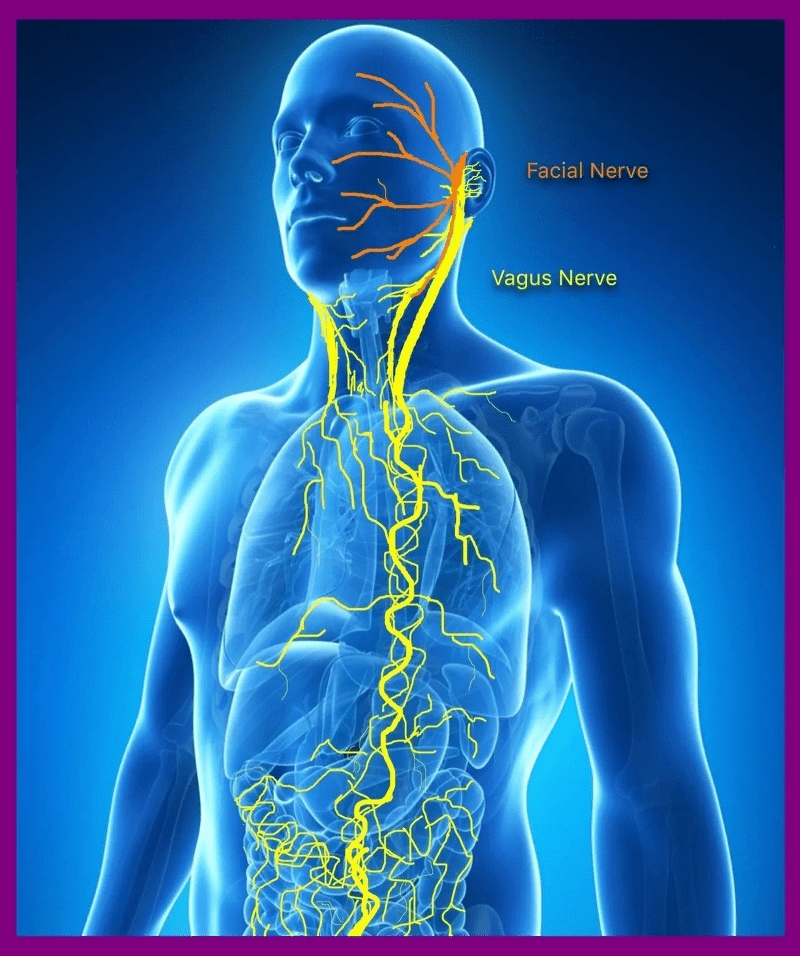
(Photo: https://www.ncbi.nlm.nih.gov/books/NBK547696/figure/article-32267.image.f1/)
It is the main nerve that runs the parasympathetic (rest and digest) system and gives information about the body back to the brain.
So when people say, “Stimulate your vagus nerve,” they usually mean:
“Help your body shift out of stress mode and into a calmer, regulated state.”
So Why Is Everyone Talking About the Vagus Nerve?
Because it’s directly connected to:
- Anxiety
- Burnout
- Digestive issues
- Heart rate variability
- Trauma recovery
- Emotional regulation
- Inflammation
- Immune function
Research institutions like Harvard Medical School and Cleveland Clinic have published extensively on how vagus nerve function affects overall health.
There is also medical treatment called vagus nerve stimulation (VNS), used for conditions like epilepsy and depression, approved by the U.S. Food and Drug Administration.
So this isn’t just a wellness trend — it’s rooted in real physiology.
To learn more about how to stimulate the vagus nerve, read our blog here! https://konacloudforest.com/blog/how-to-stimulate-the-vagus-nerve-improve-daily-life/